
This cat water fountain buying guide explains the practical details to compare before choosing a product. A cat water fountain can be a convenient way to keep a water station circulating, but the right choice depends on your home, your cat’s habits, and how much maintenance you are willing to do.
For U.S. shoppers, compare fountain capacity in fluid ounces as well as liters. Check that replacement filters match the exact fountain model, and review the current Amazon.com listing before ordering.
This guide explains the features worth comparing before you buy. It is a research-based buying guide, not a report of hands-on testing or a claim that a particular fountain is best for every cat.
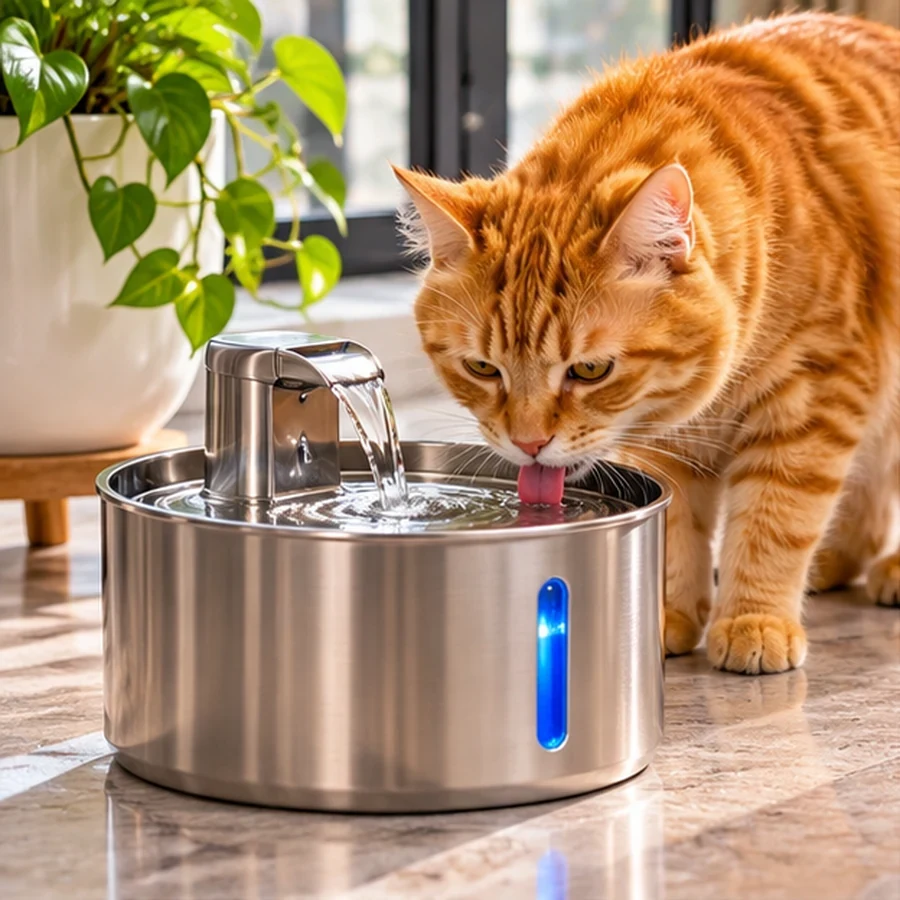
1. Choose a material you can maintain
Cat fountains are commonly sold in plastic, stainless steel, and ceramic designs. Each has practical trade-offs. Plastic models are often light and easy to move, but inspect the finish for scratches and follow the maker’s cleaning instructions. Stainless steel is typically durable and has a smooth surface; check whether the bowl and other water-contact parts can be removed for cleaning. Ceramic can look attractive and feel substantial, but it may be heavier and can chip if dropped.
Do not choose on material alone. Look at seams, corners, detachable parts, and whether you can reach every surface that needs routine washing.
2. Match the capacity to your household
A larger reservoir may mean fewer refills, but it also takes more space and can be heavier to lift when full. Consider how many pets will use it, where it will sit, and how often you are realistically able to refresh the water and clean the unit. A smaller fountain may suit a compact home or a single-pet household, while a multi-pet home may prefer a larger capacity.
Capacity does not remove the need for daily attention. Follow the manufacturer’s instructions for water changes, cleaning, and pump care.
3. Understand the filter system and ongoing cost
Many fountains use a replaceable filter, sometimes alongside a pre-filter that catches larger debris. Before buying, check which filter model is required, how many are included, how frequently the maker recommends replacing them, and whether replacement packs are easy to obtain. Compare the continuing cost, not just the fountain’s initial price.
Filters do not make a fountain maintenance-free. Hair and debris can collect around the pump and intake. Read the instructions to understand how to disassemble and clean these parts safely.
4. Check cleaning and dishwasher guidance
Look for a design that comes apart without special tools and has few hard-to-reach corners. If the listing says that some parts are dishwasher-safe, confirm exactly which parts and which dishwasher settings are permitted. Keep electrical components and the pump out of water unless the instructions specifically say otherwise.
5. Think about sound, power, and placement
Pump noise can vary by model and may change with water level, placement, and maintenance. Look for clear information about pump operation and listen to it in a quiet room during the return period if you purchase one. Also check the cord length, outlet location, cable management, and whether the unit has a battery option. Keep cords arranged so pets cannot chew or pull them.
Place the fountain on a stable, level surface away from litter boxes and busy walkways. A washable mat can help catch splashes. Make sure your cat can approach it comfortably and that it does not block an escape route or become a trip hazard.
6. Use this pre-purchase checklist
- Is the material and finish suitable for the way you plan to clean it?
- Can you remove and wash the bowl, reservoir, and pump area as instructed?
- Are replacement filters available, and what will they cost over time?
- Is the capacity suitable for the number of pets using it?
- Are the sound level, cord length, and power requirements acceptable for the intended location?
- Does the manufacturer provide clear setup, cleaning, and troubleshooting instructions?
- Is there a reasonable return policy and a stated warranty?
7. Help your cat adjust gradually
Some cats investigate a new object immediately; others need time. Set the fountain up according to the manual and consider keeping a familiar water bowl available while your cat gets used to the new station. Never force a cat to use a fountain. If your cat’s drinking habits change suddenly or you are concerned about hydration, speak with a veterinarian rather than relying on a product change alone.
The bottom line
The most suitable cat water fountain is one that fits your space, is straightforward to clean, has accessible replacement filters, and is practical for your household to maintain. Compare the full ownership cost and read the manufacturer’s care instructions before choosing.
Explore more cat product guides from Shadow Paws. This article is general shopping information and is not veterinary advice.
Related guides and product picks
Explore our curated cat product picks. Continue your research with our cat litter box buying guide and indoor cat toy guide.
Cat water fountain buying guide: compare the full ownership cost
Before choosing a model, estimate more than the checkout price. List the replacement filters, any pre-filter pads, electricity needs, cleaning supplies, and the time required to take the pump apart. A fountain with a lower purchase price may cost more to maintain if its filters are difficult to find or its parts are awkward to clean. Check whether replacement filters are sold in multi-packs and whether the manufacturer lists a clear part number.
A practical cleaning routine
Follow the product manual rather than assuming every fountain can be cleaned in the same way. A useful routine is to refresh the water, remove visible hair or debris, wash the water-contact parts as instructed, and inspect the pump intake. Unplug the unit before cleaning electrical components. Allow washable parts to dry as directed before reassembly, and never immerse a pump unless the instructions explicitly permit it.
Keep a familiar water bowl available while your cat explores a new fountain. Watch whether your cat approaches it comfortably; do not remove access to fresh water just to encourage use of a new product. Cornell’s Feline Health Center explains that water needs vary with diet and health, and that some cats prefer fountains while others do not. Read its cat hydration guidance for general background, and contact a veterinarian about concerns with drinking or hydration.
Common cat water fountain buying mistakes
- Choosing by reservoir capacity without checking the fountain’s footprint and refill access.
- Assuming the advertised filter will fit every revision or model in a product family.
- Ignoring pump cleaning, cable placement, water splash and the location of a nearby outlet.
- Believing a fountain replaces routine fresh-water changes or a second water station.
- Assuming every cat will prefer moving water; individual preferences differ.
Cat water fountain buying guide FAQs
Should every cat have a water fountain?
No. A clean, accessible bowl is suitable for many cats. A fountain is an optional water station that some cats may prefer. Keep fresh water available and consider your cat’s behaviour, household layout and cleaning routine.
How often should a cat fountain be cleaned?
Use the manufacturer’s cleaning schedule for the exact model. Hair, food particles and biofilm can collect around water-contact parts, so inspect the bowl and pump regularly and clean them as instructed.
Is stainless steel always the best fountain material?
Not automatically. Stainless steel, ceramic and plastic all have trade-offs. Compare construction, seams, weight, cleaning access, replacement parts and your cat’s comfort instead of relying on material alone.
Where to place a cat water fountain
Choose a level surface where the cord can be routed safely and the fountain can be reached without blocking a walkway. Keep it away from litter trays and food debris, and leave enough room to lift the reservoir and carry it to a sink. If the unit is close to a wall, check whether you can still remove the lid and reach the pump for cleaning. A fountain that is awkward to refill can quickly become a burden.
Before purchasing, measure the base and compare it with the available counter or floor space. Check cable length, outlet position, splash risk and any instructions about keeping the pump submerged. Do not place electrical components where a curious pet can chew the cable or knock the unit over. Keep a separate clean water bowl available while you test the new arrangement.
A cat water fountain buying checklist
- Confirm the exact capacity and dimensions of the model.
- Check filter part numbers and whether replacements are easy to order.
- Read pump cleaning and cable-safety directions before setup.
- Look for removable parts that allow access to corners and water channels.
- Compare refill frequency, noise, power needs and cleaning time.
- Keep an alternative bowl available and observe your cat’s response.
This cat water fountain buying guide is intended to make maintenance and fit easier to compare; it is not a recommendation to replace a water bowl or a veterinary treatment. If your cat drinks much more or less than usual, ask a veterinarian rather than relying on a new fountain to solve the problem.