
This cat toys for indoor cats buying guide explains how to compare play styles, construction, supervision needs, and cleaning before choosing toys. The most useful toy is one your cat enjoys and that you can use safely as part of a regular play routine.
For U.S. shoppers, check the listed toy dimensions in inches and inspect size guidance for detachable parts or small components. Supervise the first play sessions and replace a damaged toy.
This guide explains common toy types and what to check before buying. It is not a claim that a specific toy has been tested by Shadow Paws.
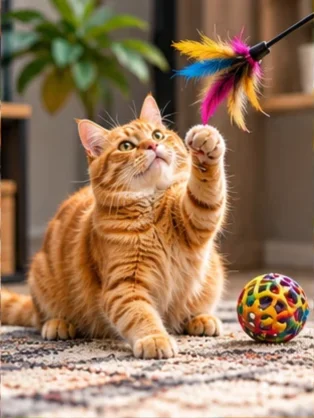
Indoor Cat Toys Buying Guide: What to Compare
Before buying, consider your cat’s preferred play style, toy size, materials, detachable parts, supervision requirements, and how easily the toy can be inspected and cleaned.
Match the toy to your cat’s play style
Some cats enjoy chasing a moving toy, while others prefer batting, pouncing, climbing, or investigating objects that move when touched. Wand toys allow a person to guide movement during interactive play. Balls and soft toys can suit cats that enjoy batting or carrying objects. Puzzle feeders and treat-dispensing toys add a problem-solving element, but check that the design is appropriate for your cat and the food you use.
Interactive toys need supervision
Wand toys, strings, ribbons, feathers, and small detachable parts can present risks if chewed or swallowed. Put interactive toys away after play and inspect them for loose pieces, fraying, cracks, or damage. Do not leave string-like toys where a cat can play with them unsupervised.
Check size, construction, and materials
Choose toys that are appropriately sized for your cat and do not have small parts that can easily detach. Read age or weight guidance where provided. Inspect seams, glue points, bells, plastic components, and batteries. If a toy becomes damaged, remove it instead of attempting a quick repair that could create a new loose part.
Make independent-play toys practical
For toys intended for independent play, check the manufacturer’s safety instructions and whether the toy needs to be secured or assembled. Avoid assuming that a product described as “interactive” is suitable to leave with every cat. Observe how your own cat uses it before deciding whether it can remain accessible.
Rotate toys rather than buying endless new ones
Keeping a small selection available and rotating other toys can help maintain novelty without filling the home with clutter. Store toys in a dry place and clean them according to the material and manufacturer instructions. Discard items that cannot be cleaned or have become worn in a way that creates a hazard.
Indoor cat toy checklist
- Does the toy match the way your cat prefers to play?
- Are its size and construction suitable for your cat?
- Can small parts, strings, or other components detach?
- Does the product require supervision or need to be stored after use?
- Can it be cleaned and inspected easily?
- Are replacement parts, batteries, or special accessories required?
A simple play routine
Offer short, positive play sessions and let your cat take breaks. Try different toy types and notice which ones your cat chooses. If play behavior changes suddenly or your cat seems uncomfortable, consult your veterinarian. Toys are for enrichment and enjoyment, not a substitute for addressing health or behavior concerns.
Final thoughts
Choose cat toys for your individual cat, inspect them regularly, and supervise toys with strings or detachable parts. A few suitable toys used thoughtfully can be more practical than a large collection your cat ignores.
See more cat product guides from Shadow Paws.
Related guides and product picks
Explore our curated cat product picks. Continue your research with our cat brush buying guide and cat water fountain buying guide.
Indoor cat toys buying guide: choose a balanced toy mix
A practical toy collection does not need to be large. Start with a few formats that suit your cat: one interactive wand toy for shared play, a lightweight object for batting, and a puzzle or treat-dispensing toy if your cat enjoys exploring how things work. Rotate items to keep play interesting rather than leaving every toy out all the time.
Look for loose threads, sharp edges, exposed wires, detachable bells, small plastic parts or damaged stuffing. Put string, ribbon and wand toys away after supervised play. The ASPCA’s feline enrichment ideas offer practical ways to create play and exploration opportunities at home.
Toy storage, rotation and cleaning
Keep a small number of toys available and store the rest in a dry, closed container. Rotate them when your cat loses interest. Wash fabric toys only as directed, dry them fully, and check that seams remain secure after cleaning. Hard plastic toys should be inspected for cracks and rough edges. Discard damaged items rather than trying to repair a toy that your cat may chew.
Set up play that respects your cat
Move a wand toy in ways that invite your cat to stalk, chase and pounce, but allow breaks when your cat disengages. Some cats prefer short sessions; others enjoy longer exploration. Avoid directing play toward hands or feet, and do not force interaction. A cat that hides, freezes or becomes overstimulated needs space rather than more stimulation.
Indoor cat toys buying guide FAQs
Are feather and string toys safe to leave out?
Use them during supervised interactive play and store them afterwards. Strings, ribbons and small attachments can be hazardous if chewed or swallowed.
How many cat toys should I buy?
There is no fixed number. A small mix of safe toys that suit your cat’s play style is often more useful than a large collection that is never rotated or inspected.
When should a cat toy be replaced?
Replace toys with loose parts, broken seams, sharp edges, exposed stuffing or components that could detach. Follow the manufacturer’s guidance and check toys regularly.
Rotate indoor cat toys without losing variety
Keep a small selection available and store the rest in a dry place. Bring out a different toy when your cat’s interest fades, then return to a familiar favourite later. Rotation can make an ordinary toy feel novel without buying new products every week. Keep toys with strings, ribbons, feathers or small attachments in a closed container between supervised sessions.
Choose play intensity to suit the cat
A kitten may enjoy frequent bursts of chasing and pouncing, while a senior or less active cat may prefer slower movement and easier access. Let the cat set the pace. Use a wand toy to guide movement across open floor space, and avoid dangling small parts directly in front of the mouth. Puzzle feeders should be stable, easy to clean and appropriate for the food or treats being used.
Indoor cat toys inspection checklist
- Check seams, stitching and attached feathers before each play session.
- Remove broken strings, loose bells, cracked plastic and exposed filling.
- Choose balls and small objects too large to be swallowed whole.
- Wash toys according to the maker’s directions and dry them completely.
- Store interactive toys after use and supervise play with detachable pieces.
- Replace damaged toys rather than patching a part that may come loose again.
Indoor cat toys are most useful when they match your cat’s interests and can be inspected easily. Keep play varied, positive and supervised when a toy has pieces that could detach.
Build a safe indoor cat toy play routine
Choose a clear floor area before starting interactive play. Move a wand toy in short, varied patterns that let the cat stalk, chase and pounce, and pause when the cat needs a break. Keep the toy away from fragile objects, hot surfaces and places where a cat could become trapped. Finish the session calmly and put string, ribbon and small attachments away once play is over.
Rotate a few indoor cat toys rather than leaving every item out all the time. This makes it easier to inspect each toy and notice damage. Some cats prefer soft balls or crinkle toys, while others enjoy puzzle feeders or chase games. Observe what your cat chooses instead of buying a large collection based only on product descriptions.
Choose puzzle toys and treat dispensers thoughtfully
Puzzle feeders should be stable, easy to open and simple to clean. Check the opening size and whether the toy is suitable for the food or treats you plan to use. Start with an easy setting so your cat can understand the activity. If the toy becomes frustrating, causes food to get stuck or cannot be washed thoroughly, choose a simpler option. Treats should remain an appropriate part of the cat’s overall daily diet.
Not every cat wants the same type of enrichment. A shy cat may prefer a quiet object to bat around, while a playful cat may enjoy a wand session with a person. Give the cat a choice, keep the play area safe and stop if the animal becomes frightened or overstimulated.