
This how to choose a cat carrier explains the practical details to compare before choosing a product. A cat carrier should help you transport your cat securely while making it as easy as possible to get your cat in and out calmly. The right style depends on your cat’s size, temperament, destination, and how you plan to carry it.
For U.S. shopping listings, compare the carrier’s internal dimensions in inches with your cat’s length and standing height. Car, vet and airline trips can have different requirements, so check the carrier maker and transport provider rules before travel.
This research-based guide explains the features worth comparing before you buy. It is not a claim that Shadow Paws has tested a particular carrier.
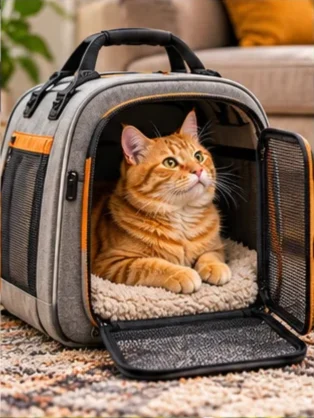
1. Measure your cat and check usable space
Use the manufacturer’s measuring instructions and compare your cat’s length and height with the carrier’s interior dimensions. Your cat should have enough room to stand, turn around, and lie down in a natural position for the intended journey. Do not rely only on the carrier’s exterior measurements or a broad size label such as “medium.” If your cat is between sizes, check the maker’s guidance and consider how the carrier will be transported when occupied.
2. Compare the main carrier styles
Hard-sided carriers can offer a firm structure and may be easier to wipe down. Soft-sided carriers are often lighter and can be convenient to carry, but inspect the frame, seams, zippers, and mesh panels carefully. Top-loading designs may make it easier to lower a cat into the carrier, while a front door can be useful for a cat that is comfortable walking inside. Some carriers offer both entry options.
Choose a style that suits your cat’s handling tolerance and your ability to secure every opening. A carrier should not collapse, open unexpectedly, or allow the cat to push through a weak panel.
3. Look at ventilation and visibility
Check the number and placement of ventilation openings and whether they remain unobstructed when the carrier is carried. Mesh panels can improve airflow and visibility, but they should be securely attached and resistant to damage from scratching. Do not cover ventilation openings with blankets or accessories in a way that restricts airflow.
4. Inspect doors, latches, and carry points
Open and close each door and latch according to the instructions. Look for secure fasteners, sturdy hinges, reliable zippers, and handles that feel comfortable under the expected load. If the carrier has shoulder straps, check how they attach and whether they make the carrier stable. Do not assume an advertised weight limit means the carrier will be comfortable or safe for every cat at that weight.
5. Make cleaning and storage practical
Accidents can happen during travel. Consider a removable, washable liner or a smooth base that can be cleaned according to the manufacturer’s care instructions. Check whether parts can be disassembled without tools and whether replacement components are available. Store the carrier in an accessible place so it can become a familiar object rather than appearing only before stressful trips.
6. Match the carrier to the journey
A carrier used for a short car trip may have different practical requirements from one used for airline travel. If you plan to fly, check the airline’s current pet travel rules before buying; dimensions and accepted carrier styles can vary by airline, aircraft, and route. For car journeys, secure the carrier according to veterinary and vehicle-safety guidance and never allow a cat to roam freely in a moving vehicle.
Cat carrier buying checklist
- Compare your cat’s measurements with the usable interior dimensions.
- Choose a hard-sided or soft-sided design that suits the journey and your cat.
- Check entry options, door latches, zippers, seams, and ventilation.
- Make sure the handle and any straps can support the carrier comfortably and securely.
- Check whether the base, liner, and interior surfaces are easy to clean.
- Read the manufacturer’s instructions for weight limits and safe transport.
- Check airline requirements before buying a carrier for air travel.
Help your cat become familiar with the carrier
When practical, leave the carrier open in a familiar room and allow your cat to investigate at its own pace. Comfortable bedding and positive, reward-based introductions may help some cats become more relaxed around it. Never force a frightened cat into a carrier when there is time to plan a calmer approach. Ask your veterinarian for advice if travel causes significant distress or your cat has mobility or health needs.
Final thoughts
Prioritize secure construction, appropriate interior space, ventilation, easy cleaning, and a style you can use confidently. A carrier that fits your cat and your regular travel needs is more useful than one chosen only for appearance or extra features.
Explore more cat product guides from Shadow Paws. This article is general shopping information, not veterinary or airline advice.
Related guides and product picks
Explore our curated cat product picks. Continue your research with our cat litter box buying guide and cat brush buying guide.
How to choose a cat carrier for car journeys
For car travel, a carrier should be secured so it cannot slide or tip during sudden braking. Check the carrier maker’s directions for approved restraint points and placement. Keep the carrier away from direct sun and never leave a pet unattended in a parked vehicle. Use a familiar blanket only if it does not block ventilation or the door.
The American Veterinary Medical Association advises keeping cats in a carrier during car trips so they remain contained and do not move around the driver’s footwell. Read the AVMA pet travel guidance and check your airline or transport provider’s current requirements before a longer journey.
Make carrier practice gradual and positive
Leave the carrier open in a calm room and allow your cat to investigate it without pressure. Put a familiar bedding item inside, offer a treat nearby, and reward voluntary exploration. Gradually practise closing the door for a few seconds, then opening it again before your cat becomes distressed. Increase the time slowly and stop if your cat shows strong signs of fear.
Cat carrier buying guide FAQs
Should a cat carrier have top and front openings?
Multiple openings can make access more flexible, but check that each door latches securely and does not create an escape gap. Choose a design you can handle calmly and safely.
Can I use a soft-sided carrier for every trip?
Not necessarily. Compare the structure, ventilation, fastening points and travel-provider requirements. Some journeys require a carrier with specific construction or measurements.
How can I help a cat that dislikes carriers?
Start with short, positive introductions at home. Do not force your cat into the carrier for practice. For persistent travel anxiety or medical concerns, ask your veterinarian for individual advice.
Carrier checklist for a longer trip
Before a journey, check the carrier door, hinges, clips, zippers and handle. Confirm that ventilation openings are not blocked by a blanket or cover. Add a familiar absorbent layer if it does not reduce usable space, and carry spare bedding for longer trips. Keep identification and any required travel documents accessible. For flights or other public transport, confirm the exact carrier dimensions and construction rules with the provider before purchase; requirements can differ by route and carrier.
Compare carrier handling and cleaning
Think about how you will lift the carrier when it is occupied. A top handle may be convenient for a short move, while a shoulder strap can distribute weight differently; check the maker’s stated load limit and attachment points. Hard-sided carriers can be wiped down, while soft-sided models may have fabric panels or zippers that need more careful cleaning. Choose a design that can be dried thoroughly after washing.
How to choose a cat carrier: final checklist
- Compare internal dimensions with your cat’s standing and resting size.
- Check entry openings, ventilation, fasteners and escape gaps.
- Choose a structure suited to the transport method and provider rules.
- Inspect handles, straps and seams for the load they must support.
- Practice calm carrier entry at home before a necessary trip.
- Keep a familiar water and rest routine around longer travel when practical.
There is no single cat carrier that works for every cat or journey. The right choice is a secure, appropriately sized design that you can handle safely and that your cat can enter without unnecessary stress.
Keep the cat carrier ready between trips
Store the carrier somewhere accessible rather than leaving it packed away until an appointment. Keep the door open during calm practice and check that the latch, zipper, handle and ventilation remain in good condition. Wash removable bedding as directed and allow all fabric parts to dry fully. If the carrier has a removable top, inspect the clips or fasteners before each journey.
For households with more than one cat, do not assume a single carrier will be suitable for every animal. Compare each cat’s measurements and the provider’s travel rules. A carrier should give the cat enough usable room while remaining practical for the person who has to lift and secure it.